When crisis strikes, will your mind work for you—or against you?
Train your mind to respond, not react.
Prepare your mind before the crisis begins.
Stronger thinking. Calmer responses. Better decisions.
A crisis is an unexpected event shaped by both internal and external stressors. The fear, uncertainty, and pressure that accompany these situations can be painful and exhausting, often affecting how a person thinks, feels, reacts, and makes decisions. Through a series of classes, the Fidel Leadership Consulting team helps participants explore how the mind responds to stress, how those responses interact with the body, and how fear and negative thought patterns can become barriers during difficult moments. Participants learn practical techniques to recognize and process these reactions quickly and efficiently, creating a stronger internal foundation for managing crisis.
With that foundation in place, participants learn to apply the same principles to the external circumstances, information, and environments surrounding a stressful event. By combining greater self-awareness with practical decision-making strategies, individuals become better prepared to respond to a wide range of challenging situations.
These tools are also valuable in everyday life, including workplace conflict, leadership responsibilities, career pressure, family concerns, relationships, and personal struggles. Over time, the principles taught in the Crisis Management Series can support a healthier, more positive, and more effective approach to stress, adversity, and change.
Crisis Management Courses
Moving Beyond Fear
Moving Beyond Fear helps participants understand how fear affects the mind and body and provides practical techniques to regain control when fear becomes overwhelming. The course explores the difference between fear and anxiety, the value of “good fear,” self-empowerment, and real-world strategies for pushing through fear, building confidence, and recovering emotionally after high-stress events.
Decision Making Under Stress: Surviving a Critical Incident
Decision Making Under Stress: Surviving a Critical Incident teaches participants how to think clearly, assess rapidly changing situations, and make effective split-second decisions when seconds matter. Through real-world critical incidents and practical survival strategies, participants learn how to prioritize threats, choose the best course of action under pressure, and reduce the long-term psychological impact after the event.
Situational Awareness
Situational Awareness helps participants recognize subtle behavioral, environmental, and interpersonal cues that may signal changes in mood, intent, or potential risk. By learning to identify patterns, read non-verbal behavior, and remain attentive to what is happening around them, participants can anticipate problems earlier, make better decisions, and respond with greater confidence in both professional and personal settings.
Workplace Violence
Workplace Violence Prevention and Response help participants recognize warning signs, suspicious behaviors, and situational factors that may indicate an escalating threat. The course emphasizes early intervention, situational awareness, and practical response strategies—including active shooter survival principles—to help employees make safer decisions before, during, and after a violent incident.
Terrorism Awareness and Response
Terrorism Awareness and Response gives participants a practical understanding of terrorist threats, extremist influence, targeting methods, and suspicious behaviors that may indicate developing risk. The course focuses on recognizing warning signs, assessing threats more realistically, and understanding the actions individuals and organizations can take to help deter, disrupt, and respond to potential attacks.
Conflict De-escalation
Conflict De-Escalation equips participants with practical techniques to recognize rising tension, manage their own reactions, and communicate in ways that reduce conflict before it escalates. Through active listening, emotional regulation, and effective verbal and non-verbal communication, participants learn to guide difficult interactions toward safer, more respectful, and constructive outcomes.
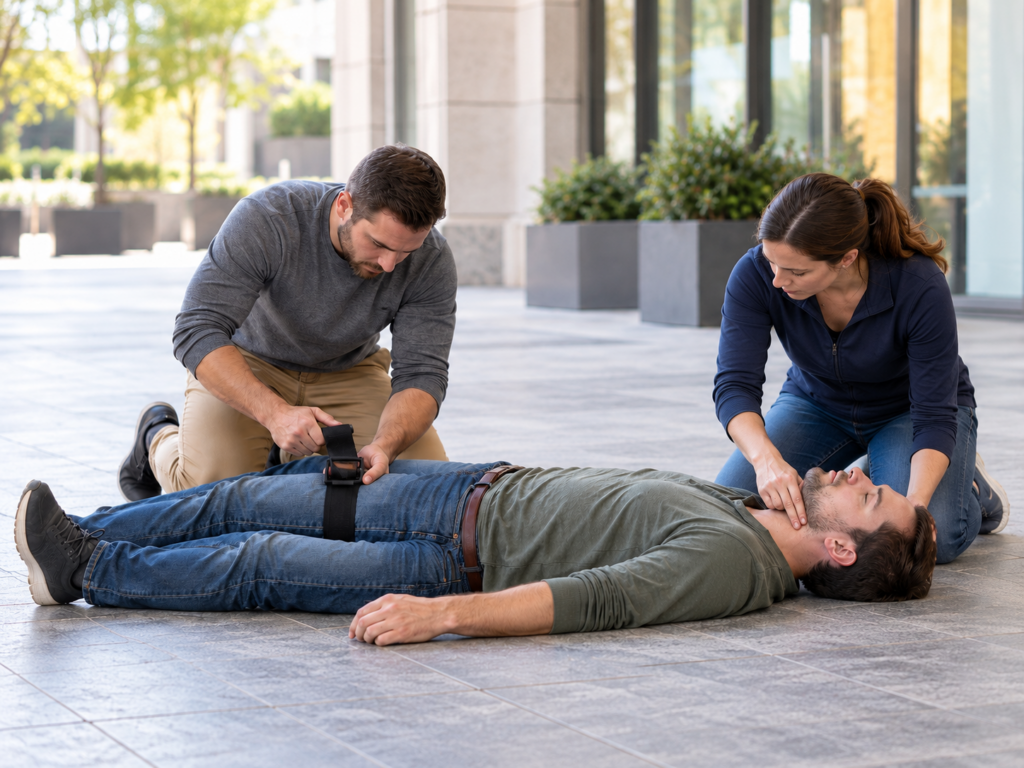
Tactical Casualty Response
When lives are on the line, preparation matters. Tactical Casualty Response (TCR) combines expert instruction with immersive, hands-on training to teach the essential skills needed to save lives during critical incidents. Participants gain practical experience controlling hemorrhaging and treating penetrating upper torso injuries, key causes of preventable death in mass casualty situations.
Surviving a Criminal Mass Casualty Event
Surviving a Criminal Mass Casualty Event prepares participants to recognize the warning signs, behavioral dynamics, and fast-moving realities of a mass casualty attack. Built around the federal Run-Hide-Fight response model, this course teaches practical survival strategies, mental preparedness, and decision-making skills that help participants protect themselves and assist others when seconds matter.
Domestic Violence Response
Domestic Violence Response prepares security personnel to recognize and safely respond to domestic violence incidents in casinos, hotels, and other workplace environments. Participants learn to identify high-risk behaviors, apply officer-safety and de-escalation strategies, understand legal and cultural considerations, preserve evidence, coordinate effectively with law enforcement, and help mitigate organizational liability by making informed decisions within the limits of their legal authority and workplace policies.
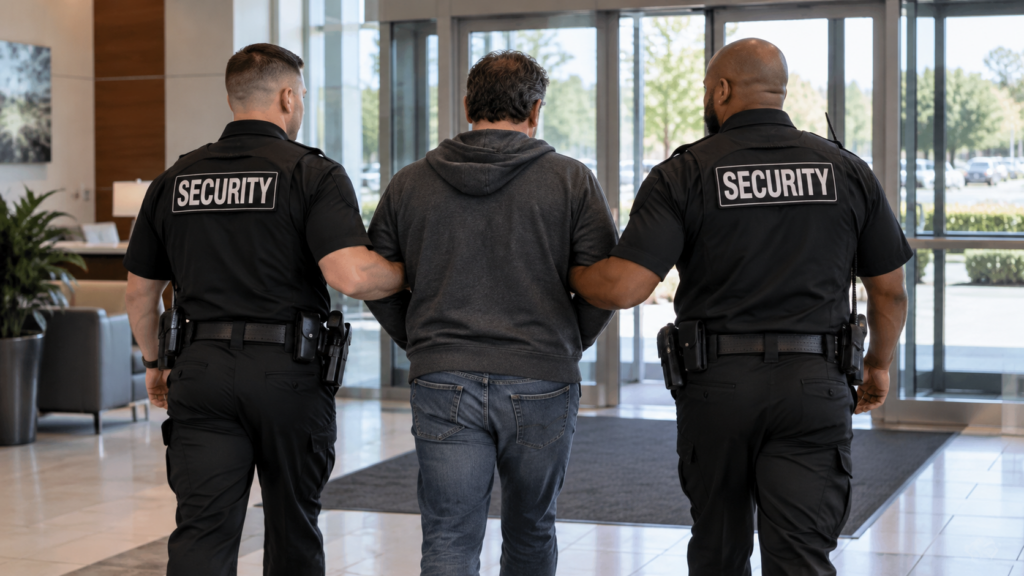
Defensive Tactics for Non-sworn Personnel
Built on the foundational principles of California POST and BSIS Defensive Tactics strategies, this course equips security officers and other non-sworn personnel with the skills needed to protect themselves and effectively manage situations where de-escalation is ineffective or impractical. Participants will learn practical control tactics designed to minimize the risk of injury to themselves and others while resolving confrontational incidents safely and professionally.

Grooming Behavior: Protecting Children From Predators
Grooming Behavior: Protecting Children from Predators helps participants understand how offenders identify vulnerabilities, build trust, manipulate boundaries, and condition children and caregivers in ways that can conceal abuse. The course focuses on recognizing grooming patterns early, understanding how children may respond to manipulation and trauma, and strengthening prevention, intervention, and investigative awareness.

Mental Health Crisis Encounters
Mental Health Crisis Encounters prepares personnel to recognize behavioral, substance-related, and medical warning signs while prioritizing safety and reducing escalation. Participants learn practical communication, de-escalation, and safety strategies for assisting people experiencing mental health or cognitive conditions, including suicidal thoughts. The course also covers emergency assistance, restraint risks, documentation, safe handoffs, and post-event support.